
Cobot plasma cutting combines three things: a collaborative robot arm, a plasma cutting torch and power source, and software that tells the cobot where and how to cut. Here’s how those three pieces work together.
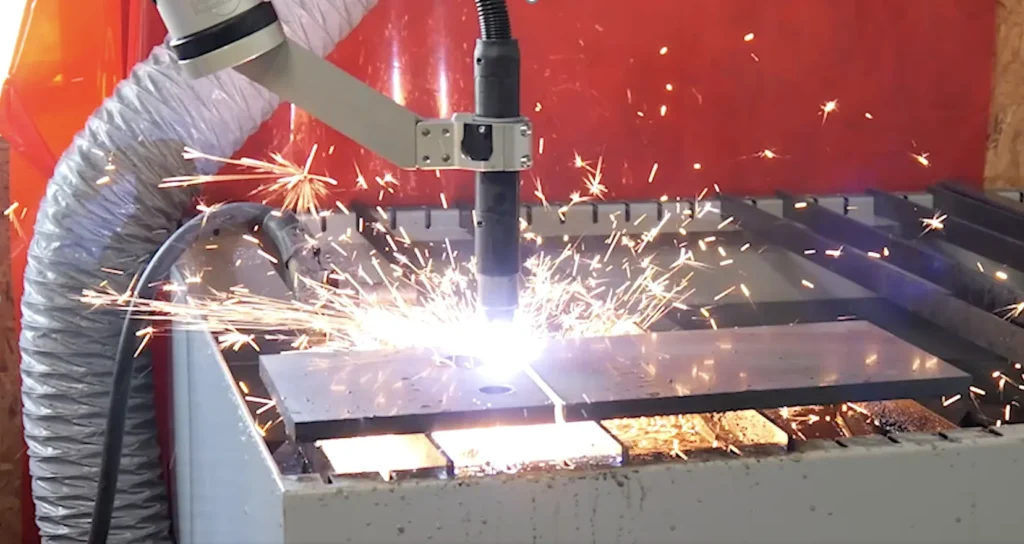
The Plasma Process Itself
Plasma cutting uses a high-temperature, high-velocity jet of ionized gas, called plasma, to melt through electrically conductive metal and blow the molten material away. An electric arc forms between an electrode in the torch and the workpiece, which ionizes the gas flowing through the nozzle. This is the same basic process whether a person is holding the torch or a machine is.
What changes with automation isn’t the physics of the cut. It’s the consistency of everything that affects the cut: torch angle, travel speed, standoff distance from the plate, and how precisely the path follows the intended shape.
The Cobot’s Role
The cobot arm holds the plasma torch and moves it along a programmed path. Because cobots are designed to work safely near people, they don’t need the safety cages that older industrial robots require, and they can be repositioned relatively easily, which matters for shops that don’t have a fixed layout dedicated to cutting.
Precision here comes from the robot arm itself. Universal Robots publishes pose repeatability specs of ±0.08 mm for the UR8 Long and ±0.05 mm for the UR12e, the two models most commonly used for cobot plasma cutting, meaning the arm returns to the same point within a fraction of a millimeter, cut after cut.
The cobot doesn’t decide anything about the cut on its own. It follows the path and parameters set by the software layer, which is where most of the actual “how easy is this to use” question gets decided.
The Software Layer
This is where systems differ the most, and it’s the part that determines whether cobot plasma cutting is practical for a shop without dedicated robotics staff. A few core pieces, using SmoothCut as an example of how this typically works:
- Cut parameter lookup. Instead of an operator manually looking up or guessing cut height, kerf compensation, and speed, the software pulls these directly from certified cut charts for the plasma system in use, based on material and thickness. This removes a common source of manual entry error.
- Path definition. For simple, repeated shapes like circles and rectangles, the operator enters dimensions directly rather than programming a path by hand. For pipes, tubes, curved or formed sheet metal, or other custom shapes, the operator can physically guide the torch mount around the part to teach the path, with the software recording it.
- Real-time compensation. Plate isn’t always perfectly flat. Software that continuously monitors arc voltage can adjust the torch’s standoff height on the fly to keep the cut consistent even across an uneven surface.
- Bevel handling. For cuts that need a weld-ready bevel rather than a square edge, the software can produce that automatically based on material, thickness, and the angle needed, using the correct consumable cartridge for the job.
Why Cobot Plasma Cutting Matters for Cut Quality
Two cuts on the same plasma system, with the same consumables, can look meaningfully different depending on torch angle, speed, and standoff distance. A manual operator manages all three by feel, which takes real skill and still varies day to day. Automating the path and the parameter lookup is what makes the cut repeatable, not just precise on a single attempt.
Where This Fits in a Shop
A cobot set up for plasma cutting can either be dedicated to cutting, or shared with welding on the same station if the underlying software supports both processes. In Smooth Robotics’ case, SmoothTool handles welding and SmoothCut handles plasma cutting, both programmed through the same flange and pendant, which is what lets a single cobot switch between the two without an operator learning a second system.
One Honest Caveat: The Shop Floor Environment
Plasma cutting produces dust, sparks, and vibration, and it’s worth mounting the cobot securely on a stable surface and following the same fume extraction and shielding practices used for manual plasma cutting. None of this is unique to automation, the same hazards exist whether a person or a cobot is holding the torch, but it’s a real setup consideration rather than something that disappears just because the process is automated.
For the broader picture of what cobot plasma cutting is and why shops adopt it, see our cobot plasma cutting guide. If you’re weighing the cost of automating cutting against what your shop currently spends on manual work, see our cost and ROI breakdown.
Want to see how this works in SmoothCut?
SmoothCut applies these steps on a Universal Robots cobot with Hypertherm Powermax SYNC. See the features and the Helsinki Shipyard case story, or talk to our experts about your application.
FAQ
No, if the system is built for fabricators rather than robotics engineers. Path definition through dimension entry or physically teaching the torch around a part doesn’t require programming knowledge.
By pulling cut height, kerf compensation, and speed from certified cut charts for the plasma system being used, based on the material and thickness selected, rather than requiring the operator to look them up manually.
Yes, if the software includes continuous arc voltage monitoring, which adjusts torch standoff height in real time during the cut.