
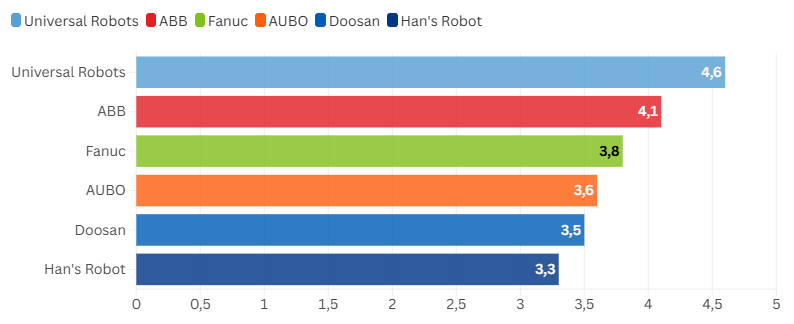
Collaborative robots (cobots) are increasingly becoming a go-to solution for welding tasks, offering flexibility, safety, and a faster return on investment than many traditional automation options. In welding applications, ease of programming, software capabilities, and ecosystem support can make all the difference.
We’ve compared six leading cobot brands for welding based on five key factors:
- Ease of use – How quickly an operator can learn and program the cobot.
- Welding features – The richness of built-in or add-on welding capabilities.
- Support and documentation – Availability of help, manuals, training, and community resources.
- Quality – Precision, robustness, and reliability.
- Price – Affordability relative to performance.
We also list each brand’s global cobot market share (across all applications, not just welding) to give an idea of market maturity and integration possibilities.
Universal Robots
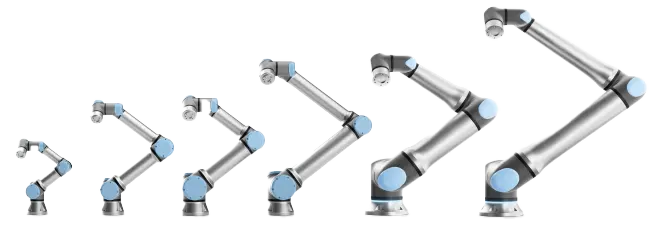
Cobots: e-series (Ur3e, UR7e, UR12e, UR16e), UR Series (UR15, UR20, UR30)
Welding Software: Smooth Robotics, Hirebotics, Vectis Automation, Wecobot, and more
Global Cobot Market Share: 33,60 %
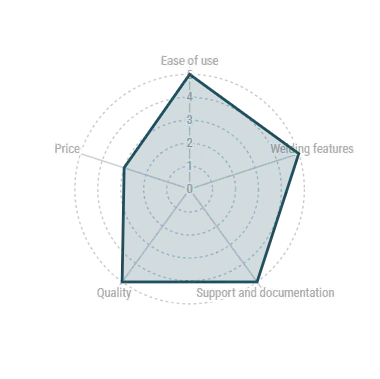
Scores: Ease of use – 5 | Welding features – 5 | Support – 5 | Quality – 5 | Price – 3
Total Score: 4,6
Universal Robots (UR) leads both in market share and user-friendliness.
With a huge ecosystem of welding software options and a simple programming interface, UR is a favorite for both beginners and experienced welders.
While the hardware comes at a premium, the strong support network and flexibility justify the investment.

 ABB
ABB
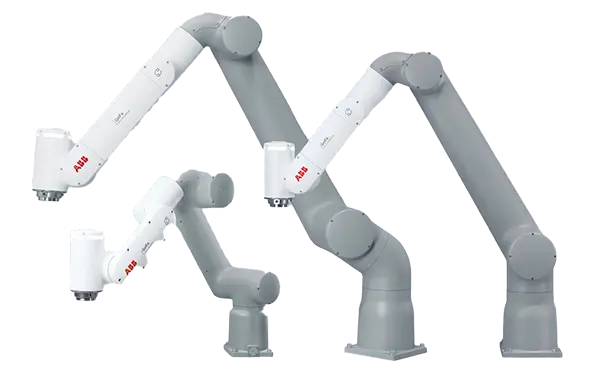
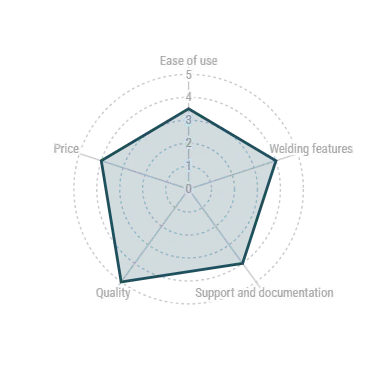
Cobots: CRB 15000 (GoFa 5, GoFa 10, GoFa 12)
Welding Software: ABB Cobot Arc Welding Package
Global Cobot Market Share: 14,30 %
Scores: Ease of use – 3.5 | Welding features – 4 | Support – 4 | Quality – 5 | Price – 4
Total Score: 4,1
ABB combines high-end hardware quality with robust, integrated welding software.
Their cobots are precise and reliable, though the learning curve is slightly steeper compared to UR.
An excellent choice for companies that value long-term performance and advanced features.
Fanuc
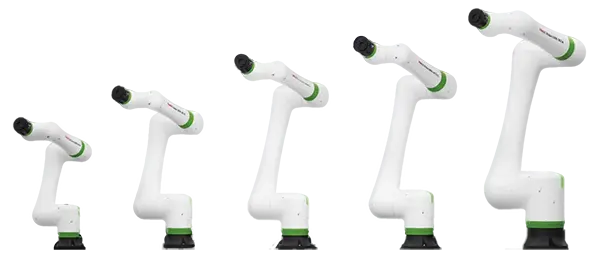
Cobots: CRX-5iA, CRX-10iA, CRX-10iA/L, CRX-20iA/L, CRX-30iA
Welding Software: Fanuc ArcTool software
Global Cobot Market Share: 11,50 %
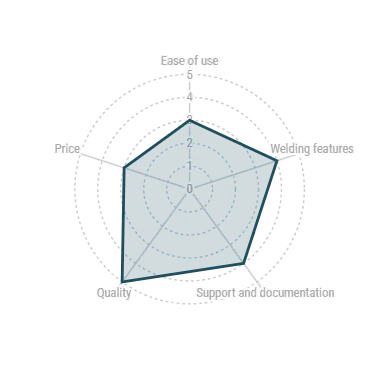
Scores: Ease of use – 3 | Welding features – 4 | Support – 4 | Quality – 5 | Price – 3
Total Score: 3,8
Fanuc’s CRX series offers highly durable hardware and proven reliability.
ArcTool software provides solid welding features, but the programming interface is less intuitive, making Fanuc best suited for teams with technical expertise or prior robotics experience.
AUBO
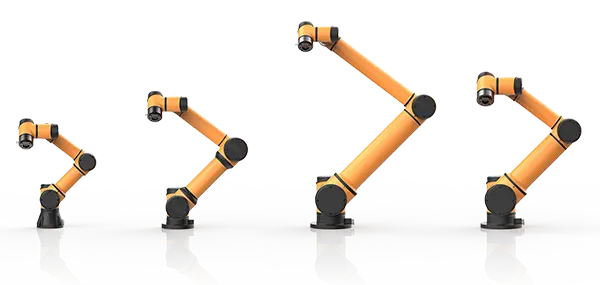
Cobots: AUBO-i3, AUBO-i5, AUBO-i7, AUBO-i10, AUBO-i12, AUBO-i16, AUBO-i20
Welding Software: Copilot / IntelliSet (Miller)
Global Cobot Market Share: 2,80 %
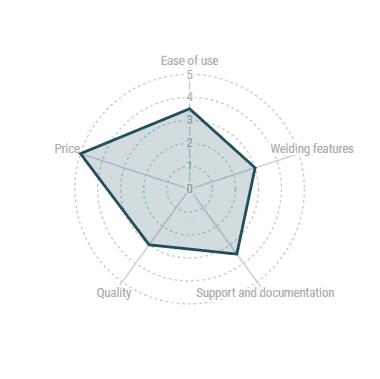
Scores: Ease of use – 3.5 | Welding features – 3 | Support – 3.5 | Quality – 3 | Price – 5
Total Score: 3,6
AUBO stands out for its affordability, especially for smaller welding operations.
While it doesn’t match the build quality of higher-priced brands, its cost-effectiveness makes it appealing for lighter workloads or budget-conscious businesses.
Doosan
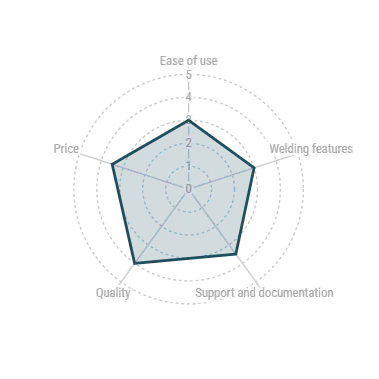
Cobots: A-series, M-series, H-series
Welding Software: Third-party solutions
Global Cobot Market Share: 4,20 %
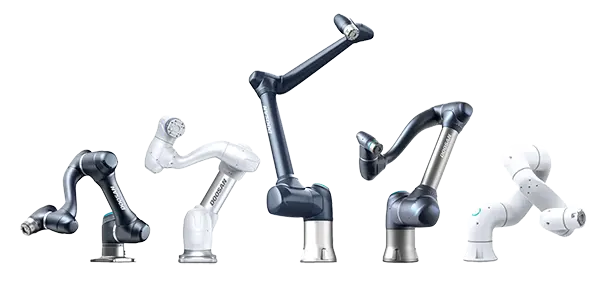
Scores: Ease of use – 3 | Welding features – 3 | Support – 3.5 | Quality – 4 | Price – 4
Total Score: 3,5
Doosan delivers solid performance with good build quality, though welding features depend heavily on third-party integrations.
It’s a capable mid-range choice but lacks the ecosystem depth of UR or ABB.
Han’s Robot (Huayan Robotics)
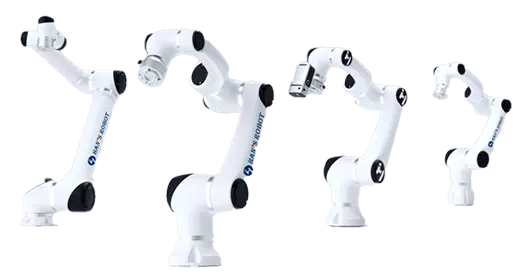
Cobots: Elfin series, other collaborative models
Welding Software: Third-party solutions
Global Cobot Market Share: Small but growing in Asia
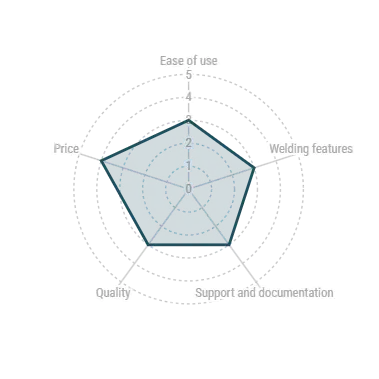
Scores: Ease of use – 3 | Welding features – 3 | Support – 3 | Quality – 3,5 | Price – 4
Total Score: 3,3
Han’s Robot is a rising player in the cobot market, with competitive pricing and an expanding presence in Asia.
Welding solutions generally require third-party software, and global support infrastructure is still developing, but it’s one to watch for cost-effective deployments.
Final Thoughts
Our comparison shows that Universal Robots remains the top choice for welding applications, thanks to its ease of use, rich software ecosystem, and strong global support.
ABB and Fanuc offer high-quality, reliable alternatives, while AUBO and Han’s Robot deliver budget-friendly options. Doosan sits in the middle ground, with good quality but fewer welding-focused tools out of the box.
Disclaimer: This review and its scores are based on research conducted by Smooth Robotics. We work closely with Universal Robots, and our SmoothTool welding software is built specifically for UR cobots. While we’ve aimed to keep this evaluation as objective as possible, our experience inevitably gives us deeper insight into the UR ecosystem.