
Real-Time Path Correction with Through Arc Seam Tracking (TAST)
1. What is Seam Tracking?
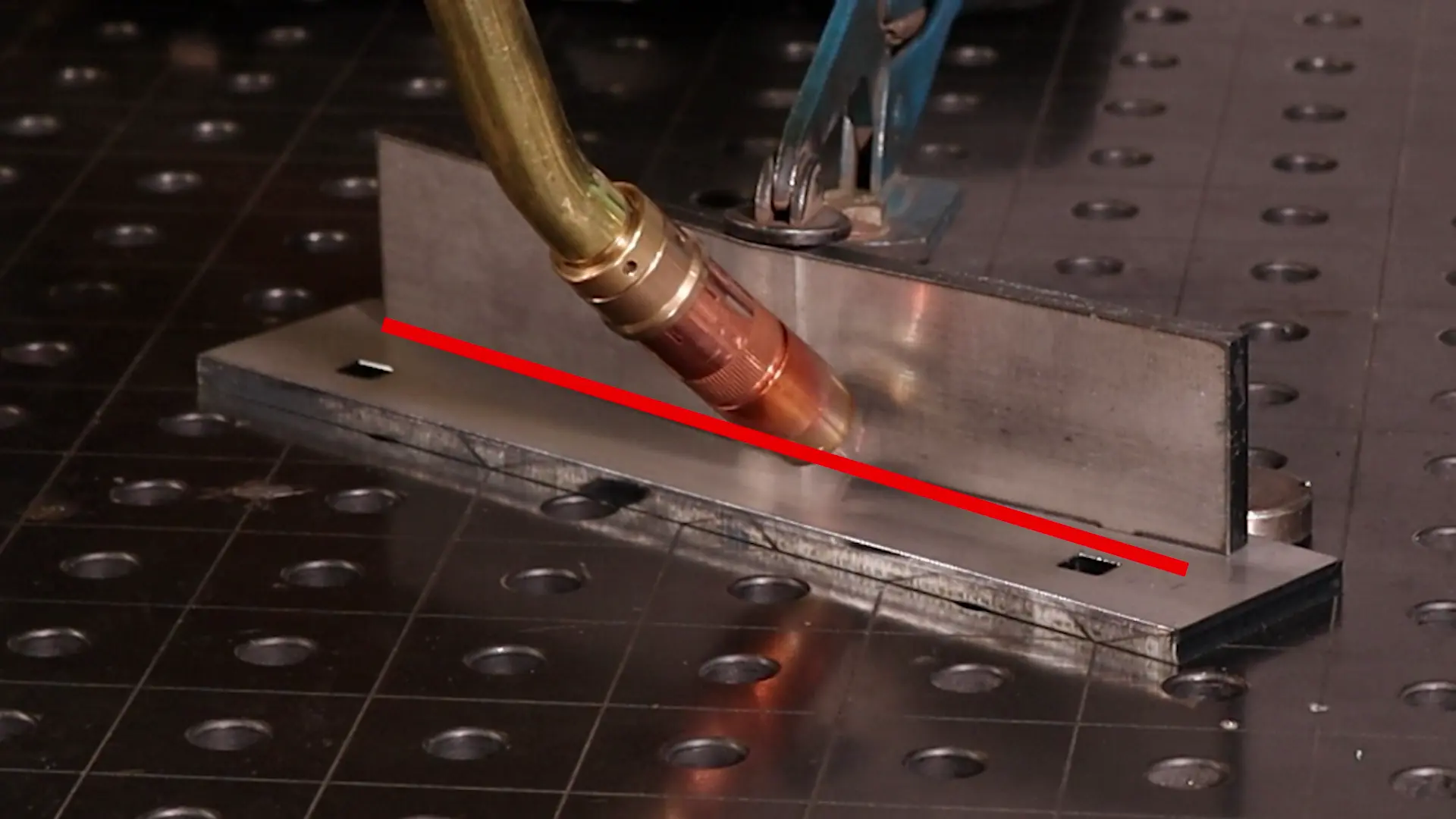
Seam Tracking is one of the newest and most advanced features in SmoothTool, available as an optional add-on module for a selected range of supported power sources. This feature uses Through Arc Seam Tracking (TAST) to automatically adjust the robot’s welding path in real time—compensating for any deviations from the originally taught path.
Instead of reprogramming every time your parts or fixtures vary slightly, Seam Tracking lets the arc do the guiding—keeping your weld on target, even if your part shifts or warps slightly during production.
2. Core Functionality
- ⚡ Real-time welding path correction via TAST (Through Arc Seam Tracking)
- 🔌 Available for selected power sources with Seam Tracking compatibility
- ⚙️ Comes with SmoothTool-tested default parameters for fast setup
- 🛠️ Two easy-to-adjust parameters for fine-tuning results
- 🧠 Advanced parameter access via the gear icon for deeper control
- 🔁 Works with both Weld and Surfacing nodes
3. Key Benefits
- 🎯 Improved weld quality – stays centered on the seam even if the part shifts
- 🕒 Saves time – fewer touch-ups and less manual correction needed
- 🔧 Simple setup – just adjust two parameters or use default values
- 💡 Highly adaptable – advanced controls available when needed
- ⚙️ Works seamlessly with your existing SmoothTool weld and surfacing nodes
4. Use Case Example
A metal fabrication shop is welding long Tee joints on slightly warped steel panels. Despite good fixturing, minor gaps and inconsistencies occur across batches. Instead of re-teaching paths or dealing with inconsistent welds, they enable Seam Tracking on the weld node. The system uses TAST to make real-time path adjustments, keeping the arc aligned with the joint and helping deliver more uniform results. Actual results depend on the joint, the setup and the process.
5. Pro Tips & Best Practices
- Use SmoothTool’s default seam tracking settings as a starting point—they’re tested and tuned for real-world use
- Tweak the main control parameters to match your specific joint type and weld speed
- For advanced use cases, press the gear icon to unlock fine-grained control
- Combine Seam Tracking with Touch Sense or Angle System for even more robust process reliability
- Make sure your power source supports TAST and is configured correctly before enabling
6. How to Access This Feature in SmoothTool
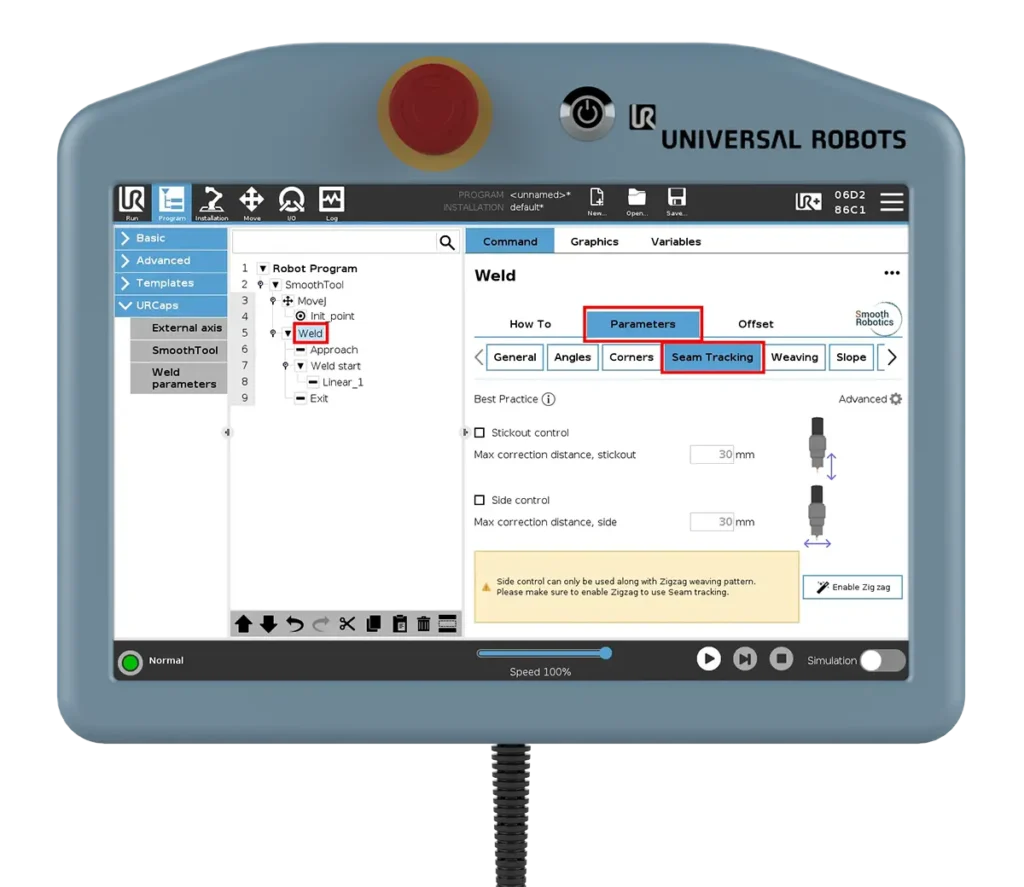
Seam Tracking can be found under the Parameters tab on both Weld and Surfacing nodes.
You’ll see it as an available option only if the Seam Tracking add-on module is installed and your power source supports it. From there, you can adjust basic parameters directly or open the Advanced settings using the gear icon on the right.
7. Why It Matters
In real-world production, no two parts are exactly alike—and even small deviations can ruin a good weld. Seam Tracking bridges that gap, letting your robot dynamically adapt to the seam in real time. With SmoothTool’s smart defaults and easy tuning, you don’t need to be a seam tracking expert to get reliable, repeatable results.
👉 Curious if Seam Tracking is available for your welding setup? Reach out to our team and we’ll help you find the right solution.
Add Seam Tracking to your cell
Seam Tracking is an optional SmoothTool feature. A partner near you can tell you what your configuration needs.
Related reading: Weaving in welding · The ultimate guide to cobot welding
8. FAQ about Through-Arc Seam Tracking (TAST)
Hidden
What is Through-Arc Seam Tracking (TAST)?
Through-Arc Seam Tracking (TAST) is a seam tracking method that uses the welding arc itself to detect the seam’s position.
The system adjusts the welding torch’s path by monitoring changes in the electrical characteristics (voltage and current) of the arc as the weld progresses.
Which Power Sources are Supported for Seam Tracking?
- MILLER AUTO-CONTINUUM™
- KEMPPI DCM (KEMPPI X5)
- LORCH (LORCH S5 SPEEDPULSE XT)
- ESAB ARISTO EDGE R
- FRONIUS TPSI
How does TAST work?
TAST works by measuring the electrical feedback from the welding arc. As the torch moves along the seam, changes in the gap between the torch and the workpiece cause variations in voltage or current. These changes are interpreted by the system to adjust the torch’s position in real-time, keeping it aligned with the seam.
What are the benefits of TAST?
- No additional sensors required: TAST relies on the welding arc itself, so no external sensors or cameras are needed.
- Cost-effective: Since it uses existing welding equipment, TAST is generally more affordable than other seam tracking methods like laser or vision-based systems.
- Robust in harsh environments: TAST performs well in challenging environments where factors like dust, light, or reflections could interfere with optical systems.
What types of welding processes use TAST?
TAST is most commonly used with MIG (Metal Inert Gas) and MAG (Metal Active Gas) and in some cases Pulse welding processes, where the welding arc provides consistent electrical feedback. It is less commonly used with TIG or other welding processes that have different arc characteristics.
What industries benefit from TAST?
TAST is widely used in industries such as automotive, shipbuilding, construction, and manufacturing, especially in applications requiring automated or robotic welding with long or continuous seams.
Can TAST handle complex weld geometries?
TAST is best suited for tracking relatively straightforward seam geometries such as fillet and butt joints.
While it can handle some curvature, it may struggle with highly complex or variable joint types compared to more sophisticated vision-based tracking systems.
What are the limitations of TAST?
- Limited to arc-based welding: TAST only works with welding processes that use an electric arc. It cannot be used with laser, friction, or other non-arc-based welding techniques.
- Less effective on variable joint gaps: If the joint gap or fit-up changes significantly during welding, TAST may have difficulty maintaining precise alignment without additional corrections.
- Requires stable arc: TAST relies on consistent arc behavior. Variations in arc stability can affect tracking accuracy.
How accurate is TAST?
The accuracy of TAST depends on the consistency of the welding arc and the sensitivity of the system. While it is precise enough for many industrial applications, it may not offer the same level of precision as laser or vision-based tracking systems.
Can TAST be integrated with cobotic welding systems?
Yes, TAST is commonly used with cobotic welding systems. The arc feedback is integrated with the cobot’s control system, allowing for automated adjustments to the torch position based on real-time arc measurements.
What maintenance is required for TAST?
Maintenance for TAST mainly involves ensuring the welding equipment is functioning properly and the arc is stable.
No special sensors are required, but regular inspection of the welding torch and power supply is recommended to maintain tracking accuracy.
Do I need to use weaving when running TAST seam tracking?
- TAST usually compensates in two directions: Side-to-side and Stickout correction. In SmoothTool, the operator can freely choose to enable one or both.
- Weaving is required only for Side-to-side correction – and it must be a Zig-Zag pattern. This specific weaving motion causes the wire to move alternately across the joint edges, which creates a measurable voltage difference between the left and right sides of the weld seam. TAST uses this voltage variation to calculate the seam centerline and apply corrections during welding.
- Linear paths with no weaving at all will not generate the necessary voltage fluctuations, making seam tracking unreliable – especially for fillet welds or V-grooves.
Is there a maximum travel speed when using TAST?
- Yes – when using TAST seam tracking, the travel speed should not exceed 600 mm/min.
- At higher speeds, the arc doesn’t stay long enough on each side of the joint during weaving, which results in weak or unstable voltage signals. This makes it difficult for the system to accurately interpret deviations and apply corrections in real time.
- Staying below the recommended travel speed ensures stable voltage response, reliable tracking behavior, and precise seam following.
What materials can TAST seam tracking be used on?
- TAST works reliably on ferrous materials such as mild steel and stainless steel, where the arc produces stable and measurable voltage differences during weaving.
- TAST is not suitable for aluminum or other non-ferrous materials, as they are typically welded using AC current, which results in unstable arc voltage. In addition, oxide layers on materials like aluminum interfere with the electrical feedback needed for tracking, making it impossible to maintain reliable seam correction.
What joint types and thicknesses are suitable for TAST?
- TAST is particularly effective in fillet welds, where the torch oscillates between two edges, producing a clear left-right voltage variation that the system can use to track the seam centerline.
- It is less suitable for butt joints and V-grooves, especially when the groove is narrow or closed. In such cases, the arc often remains centered, and the voltage signal lacks the contrast needed for effective tracking.
- TAST is generally recommended for material thicknesses of 4 mm and above. On thinner sheets, the arc does not travel far enough across the joint to create strong and reliable tracking signals.
What are the minimum requirements for the welding power source when using TAST?
- To use TAST seam tracking, the welding power source must be able to communicate a clean and stable arc voltage signal via a communication bus, such as CAN, Modbus, or another supported interface.
- TAST relies on real-time voltage readings from the arc to track the seam. Therefore, the power source must provide:
- Stable DC welding current
- Access to raw arc voltage/current values or pre-filtered signal for seam tracking
- Digital communication of the signal, with minimal latency and noise
Are there different tracking methods available with TAST?
- Yes – TAST supports multiple correction strategies, depending on the welding application and seam type.
- The most common mode is side-to-side correction (Y-axis) using Zig-Zag weaving, where TAST uses arc voltage differences to stay centered in fillet welds or open joints.
- In addition, Torch-to-Work Distance correction (also referred to as stickout control or Z-axis correction) is available. This method adjusts the vertical position of the torch to maintain a constant distance to the workpiece, which is especially useful on uneven or warped surfaces.
- This method does not require weaving. Instead, it relies on welding current (amperage) as the feedback signal. As the stickout increases, the current drops – and TAST compensates by moving the torch closer, and vice versa.
- In SmoothTool, this functionality is implemented as a dedicated feature under the Surfacing module, specifically designed to improve arc stability and deposition quality on irregular surfaces often seen in cladding, hardfacing, and repair welding.